31 Ways to Be More Martian… Starting Now!
The biggest obstacles that we face as a society are [...]

The biggest obstacles that we face as a society are [...]
Cybersecurity is everyone's responsibility! As our world becomes increasingly connected, [...]
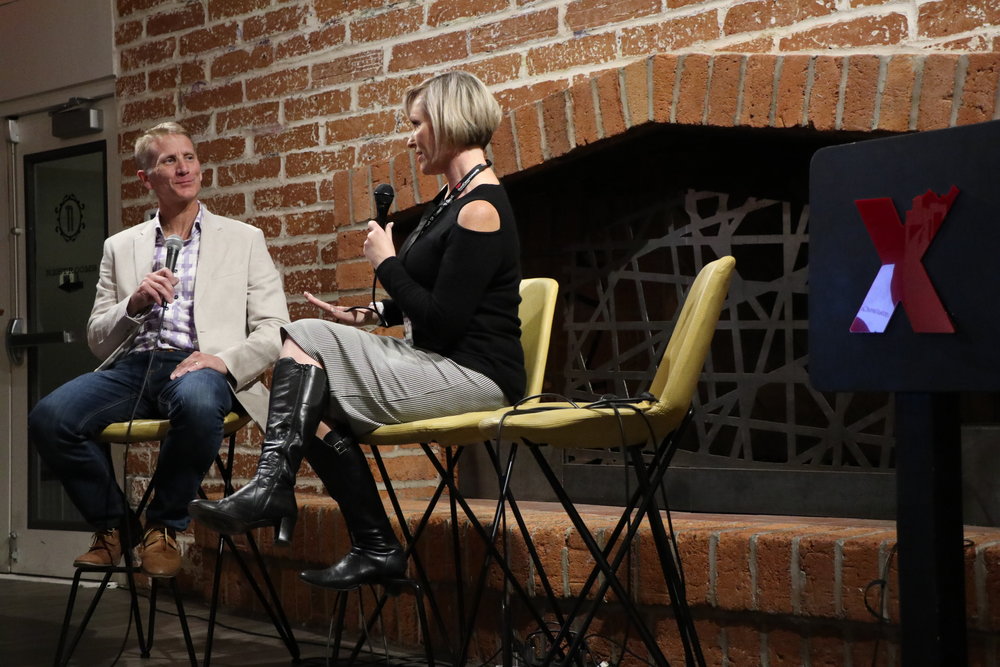
If asked to do a TED Talk, what is your idea worth spreading and why? What are your responses to these questions? Keep the conversation going and include #MartianClassroom!
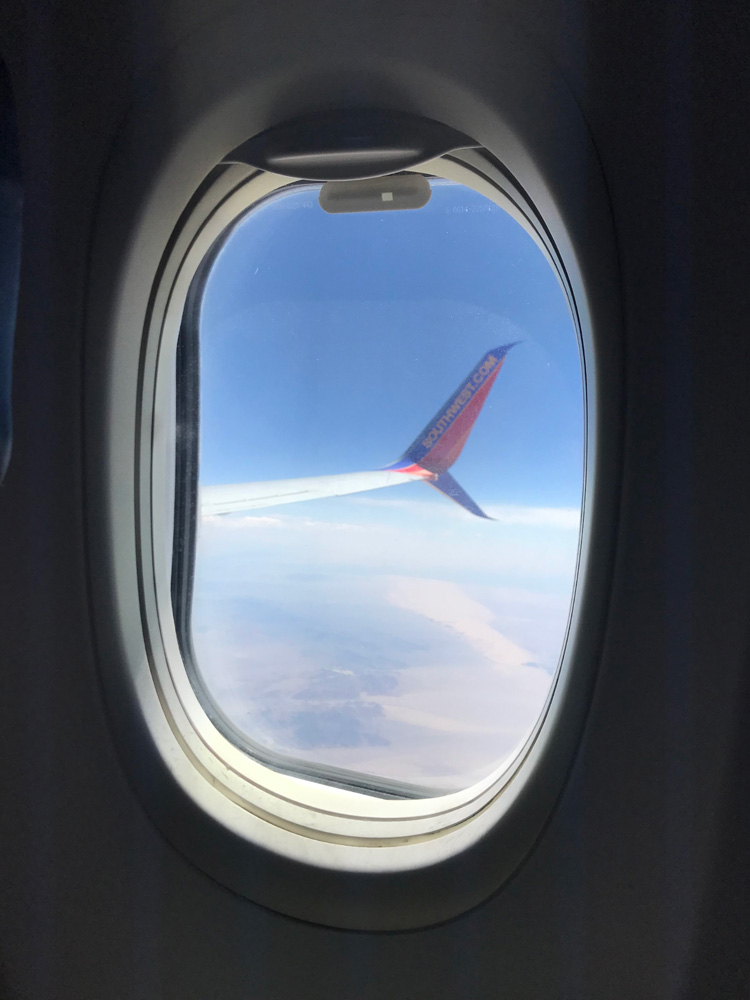
Thanks, Southwest Air, for providing relevant, diverse topics in your magazine that lead to spinoffs of their own! Next time you are flying Southwest, be sure to embrace the #JOMO and flip through the magazine, enjoy the excitement and the wonder of the view below, and allow for possibilities you had never imagined!
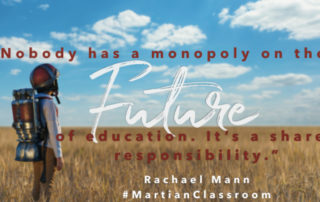
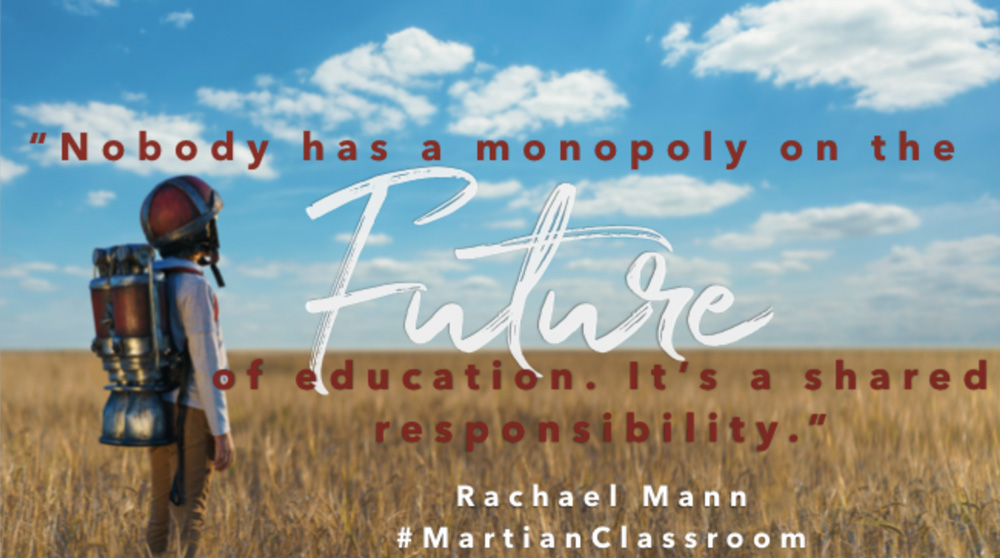
No one has a monopoly on the future of education. It is a shared responsibility.
“A person can have the greatest idea in the world- [...]
The Martians in our classrooms are already experiencing mobility in a way that is conceptually different than other generations: mobility sharing. We have ride sharing, bike sharing… and even more mobility sharing modes in the years to come.
Creativity and play are common themes in innovation and can help solve big problems. Give students agency in demonstrating mastery of content in fun and creative ways using a menu of options such as this:
We have come along way in technological advances and space travel, but in order to lead the way in future missions, we have to think bigger in education as well.
The Martian Classroom isn't just about space, it's a metaphor for the future of education and where we need to drive the learning space of the future by equipping students to thrive both on and off of planet Earth.
Educators influence the future. The Martians in our classrooms are that future and will pave the way for humanity. What an awesome responsibility we have and they have!
We are just getting started. Let's propel the change rather than waiting for the change to propel us.
Our education system is tied closely to industry; first to agriculture, then to manufacturing, now to technology. In the future, we will continue to build on this technology as we explore Space. We have hardly scraped the surface in keeping up with accelerating technologies. Dell Technologies predicts that 85% of the jobs in 2030 haven't been created yet. What steps do we need to make in order to ensure that our students are prepared for unknown jobs, on and off of our planet?